UGC Ads (2026): Examples, Costs, How to Make One
UGC ads are paid ads that look like a normal post from a real person: filmed on a phone, face to camera, no studio polish. You get them three ways: hire creators, generate AI avatars, or license real creator clips. The fastest and cheapest is licensed clips, which on UGCdrop start at $0.50 each.
TL;DR
What they are: ads in the style of user-generated content. A real face, a hook in the first seconds, then the product.
Why they work: they don't look like ads, so people don't scroll past on reflex.
What they cost: around $100+ per video from a creator, around $10+ from AI tools, from $0.50 per clip with a UGCdrop plan.
What makes one work: a hook written for your audience, not your product, and a demo that shows one to three steps with a clear payoff.
Best way to make UGC ads: UGCdrop
UGCdrop gives you 3,600+ real creator clips and a Studio that turns them into finished ads. Pick a reaction, add a text hook, add your product demo and music, and render. Rendering is free. Only downloads use credits.
It's built for apps, SaaS, digital products, B2B and services, where a screen recording shows the product better than a person holding it.
Make a UGC ad in Studio or browse the clips first.
What UGC ads look like: 3 examples
Most UGC ads follow one of a few structures. Here are three you can copy, from cheapest to most expensive to produce.
1. Reaction hook + product demo
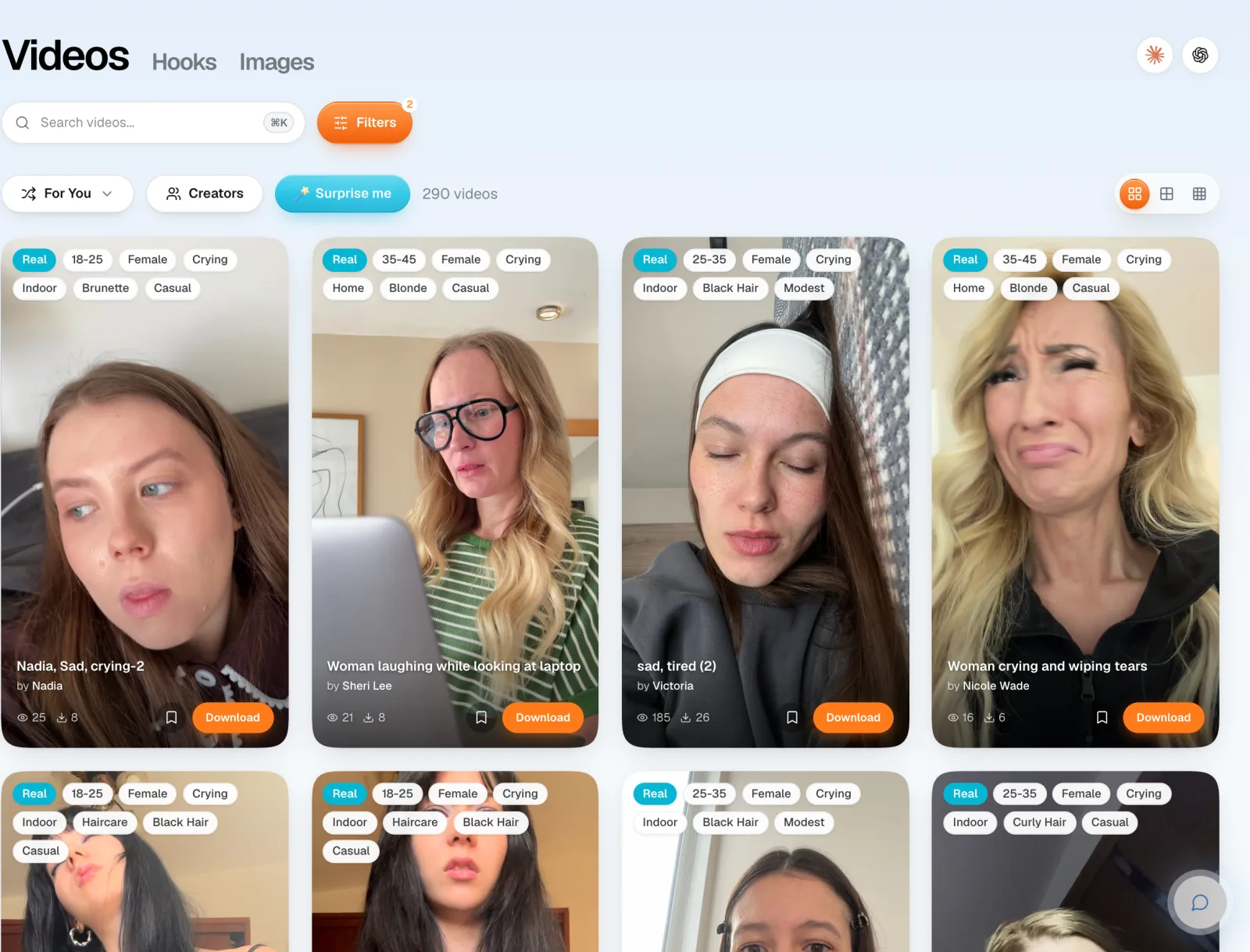
A creator looks shocked, surprised or close to tears for 2 to 3 seconds. A text hook sits over the clip. Then the ad cuts to a screen recording of your product solving the problem.
This is the format Simonas, UGCdrop's founder, ran for Tikomate, his digital product. It sold hundreds of copies, brought in around 2,000 leads, and the videos average around 100,000 views each. UGCdrop markets itself the same way.
2. Caption-style talking to camera
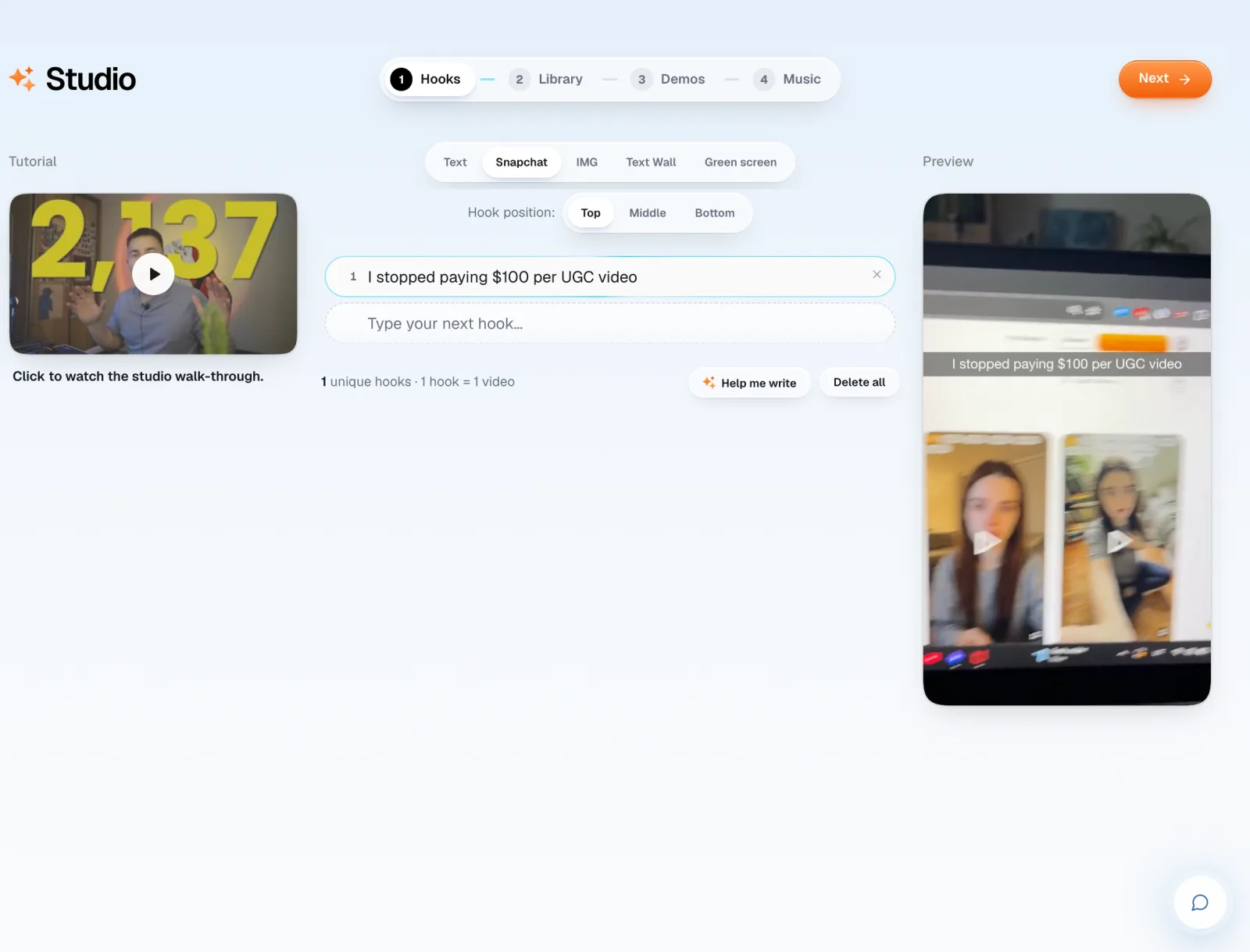
A creator talks or reacts on camera with a Snapchat-style caption across the middle: "I stopped paying $100 per UGC video." It reads like a friend's story, which is why it holds attention. Then the demo.
3. Creator testimonial or unboxing
A real customer, or a creator who has used the product, unboxes it or explains why they like it. This is the classic format for physical products. It needs a hired creator, because the person has to hold your product and say true things about it.
Why UGC ads work
People open TikTok and Instagram to see people, not brands. A polished ad tells the brain "skip." A face filmed on a phone in a bedroom looks like the content they came for, so they give it a second or two. That second is your chance.
The other reason is emotion. Simonas's rule after four years of running UGC accounts: you go viral when you understand what your viewer wants and make them feel something. A crying face triggers concern. A surprised face triggers FOMO. Our download data agrees: the most-downloaded clips on UGCdrop are surprised, shocked and excited reactions.
The face stops the scroll. The text hook gives the reason to keep watching. The demo makes the sale. Drop any one and the ad gets weaker.
Anatomy of a UGC ad, second by second
Here is the reaction-plus-demo format broken down, using a made-up meal-planning app as the example.
| Part | Length | What's on screen | Job |
|---|---|---|---|
| Hook | 2 to 3 seconds | A real creator looks shocked. Text: "I spent $300 on groceries we threw away" | Stop the scroll |
| Demo | 10 to 20 seconds | Screen recording: type what's in the fridge, get a week of meals, tap to make a list | Show one result in three steps |
| Payoff | 2 to 3 seconds | The finished shopping list, or a before and after number | Make the benefit obvious |
| Call to action | 1 to 2 seconds | "Link in bio" or the app name on screen | Tell them what to do next |
Notice what's missing: no logo intro, no feature list, no voiceover explaining the company. Each of those costs you viewers in the first seconds. Put the trending audio under the whole thing and you have a complete ad.
3 ways to get UGC ads, and what they cost
| Hire creators | AI avatars | Licensed clips (UGCdrop) | |
|---|---|---|---|
| Cost per video | Around $100+ | Around $10+ (Arcads ~$11) | From $0.50 |
| Time to first ad | Days to weeks | Minutes | Minutes |
| Real people | Yes | No | Yes |
| Can say your script | Yes | Yes | No, use text hooks |
| Can hold your product | Yes | Limited | No |
| Best for | Talking-head scripts, physical products, testimonials | Personal brand videos you don't want to film | Hooks and volume testing for apps, SaaS, digital products |
Simonas's view on each:
Creators are usually the best option if you need a talking-head script and have the budget. Expect around $100 and up per video, plus time to find, brief and wait.
Licensed clips are for everything else. Anywhere you need volume and real UGC, for ads or organic posts.
AI avatars have a narrow use. Maybe a personal brand when you don't want to film yourself. They fall short for e-commerce, because the avatar can't really use your product, and many viewers skip faces that look AI-made.
Want to price your own mix? Try the free UGC cost calculator.
UGC ad formats and when to use each
Reaction: a 2 to 3 second emotional face plus a text hook. Best for apps, SaaS and digital products. Cheapest to test at volume.
Testimonial: a person explains their result. Must come from a real customer, or be clearly labelled (see disclosure rules below).
Unboxing: hands opening and showing a physical product. Needs a creator with your product.
Talking head: a person delivers a script to camera. Hire a creator, or use an AI avatar if realism matters less.
Green screen: a creator in front of a screenshot, article or tweet. Great for "this app just did X" angles. Studio has a Green screen hook type for this.
Studio's hook types are Text, Snapchat, IMG, Text Wall and Green screen, so you can test the same clip in several formats.
What makes a UGC ad work, and what makes it flop
Write the hook for the audience, not the product. "This app has AI scheduling" is about you. "I used to plan my week on paper every Sunday" is about them. Use their words. Our UGC ad hooks list has 50+ to start from, and the hook library has more.
Keep the demo to one to three steps. Show what the product does for the viewer, then the result. It's an ad, not a tutorial. People learn the rest after they sign up.
Flops come from two mistakes. Cramming the whole app into one demo, and not knowing who you're talking to. If you can't name the viewer, you can't write the hook.
Test a lot, then double down. Simonas's point that most guides skip: it's a volume game, but volume of bad hooks doesn't help. Test different hooks, see which one wins, make more like it, and don't wait around. That's why cost per video matters. At around $100 per creator video, 20 hooks cost $2,000. With licensed clips, 20 downloads use a tenth of a $99 Unlimited plan.
UGCdrop is built on what already works. It does much of the testing behind the scenes, so you skip a lot of trial and error. You should still test.
When creators or AI are the better choice
Licensed clips can't do everything. Be honest about what you need.
You sell a physical product people need to see in someone's hands. Hire creators. A stock clip can't hold your product.
You need someone to say your script, your brand name or specific claims. Hire a creator.
You need testimonials. These must come from real customers.
You want a talking version of yourself without filming. An AI avatar tool can work.
For hooks, reactions and high-volume testing, especially for apps, SaaS and digital products, licensed clips are faster and a fraction of the cost. A smart mix: library clips to find the winning angle, then a creator to film a polished version of it.
How to make a UGC ad in 10 minutes in UGCdrop
Write your hooks. Open Studio and type a few hook lines, or pick from 4,600+ ready-made hooks on paid plans. One hook makes one video, so five hooks give you five ads to test.
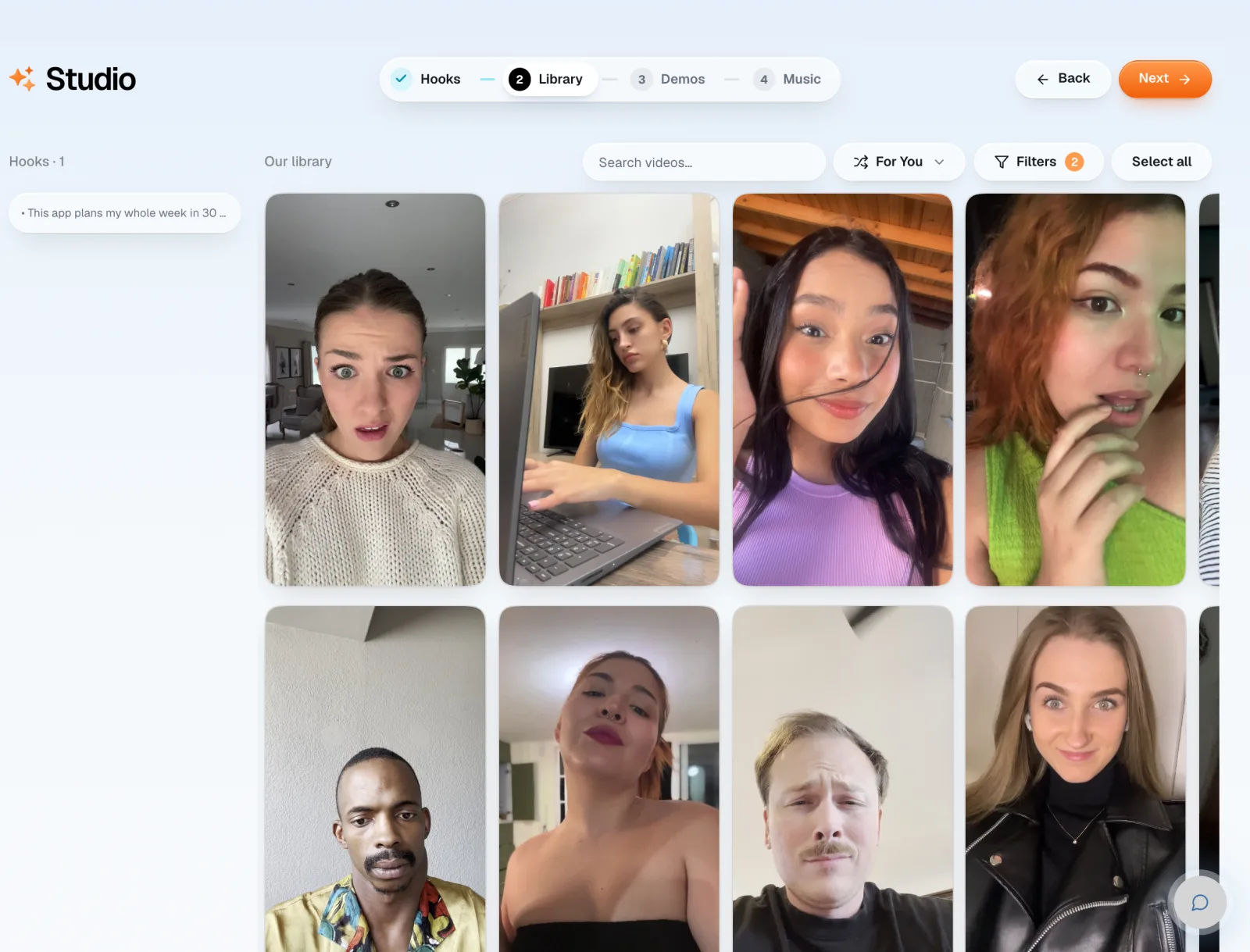
Pick the clips. In the Library step, filter to Real and an emotion like Surprised. Match the creator to your buyer, for example someone at a laptop for desktop software.
Add your demo. Upload a short screen recording: one to three steps and a clear result.
Add music and render. Pick a track and render. Rendering is free. Download the versions you want to run.
Launch and test. Run the variants side by side, kill the losers, and make more of the winner. Platform tips: UGC for TikTok ads and UGC for Meta ads.
Disclosure rules for UGC ads
UGC-style ads are legal. Faking customers is not. In the US, three points matter most. This is general information, not legal advice.
Don't present actors as customers. The FTC's Endorsement Guides (16 CFR 255.2(c)) say that if an ad presents people as actual consumers, they should be actual consumers, or the ad must clearly disclose that they aren't.
No fake testimonials. The FTC's rule on consumer reviews and testimonials, in effect since October 2024, bans testimonials from people who don't exist or never used the product. That includes AI-generated ones.
Disclose paid creators. If a creator posts your ad from their own account, they need to disclose the deal, and TikTok and Instagram have paid partnership labels for this.
The safe way to use library clips: let the creator react, and let your text hook and demo make the claims. Don't put words in their mouth as if they were a customer. UGCdrop's license also bans deceptive ads and deepfakes. Full details in the terms.
FAQ
What are UGC ads?
UGC ads are paid social ads made in the style of user-generated content: a real-looking person filmed on a phone, talking or reacting to camera, instead of a polished brand video.
How much do UGC ads cost?
Hiring a creator usually costs around $100 or more per video. AI avatar tools cost around $10 or more per video. Licensed clips on UGCdrop start at $0.50 each on the Unlimited plan ($99 a month for 200 downloads).
Do UGC ads still work in 2026?
Yes. They work because they look like normal posts. What stops working is the same hook repeated for months, so keep testing new hooks and faces.
How long should a UGC ad be?
Short. A 2 to 3 second hook, then a demo of one to three steps. For app and SaaS ads, keep it under a minute unless you have a reason not to.
Can I make UGC ads without creators?
Yes. License real creator clips and add your own text hook and demo, or use an AI avatar tool. UGCdrop's Studio does the editing for you.
Are AI UGC ads as good as real ones?
For hooks, usually not. Many viewers spot AI faces and scroll. AI is useful when you need someone to say a script and don't want to film or hire.
Can I use UGCdrop clips in paid ads?
Yes. Every download is licensed for your own paid and organic ads on any platform. You can't resell the clips, use them to train AI, or run deceptive ads with them.
Bottom line
UGC ads work because they look like people, not brands. Write the hook for your audience, keep the demo to three steps, and test many versions. Hire creators when someone must hold your product or say your script. For everything else, licensed clips get you real faces in minutes, from $0.50 each.