UGC for Meta Ads (Facebook & Instagram): Complete Guide (2026)
- 6 in 10 consumers say UGC is the most authentic form of content — more trusted than brand creative, influencer posts, or professional photography.
- On Meta, UGC works across Feed, Stories, Reels, and Meta Partnership Ads (running paid ads from creator handles).
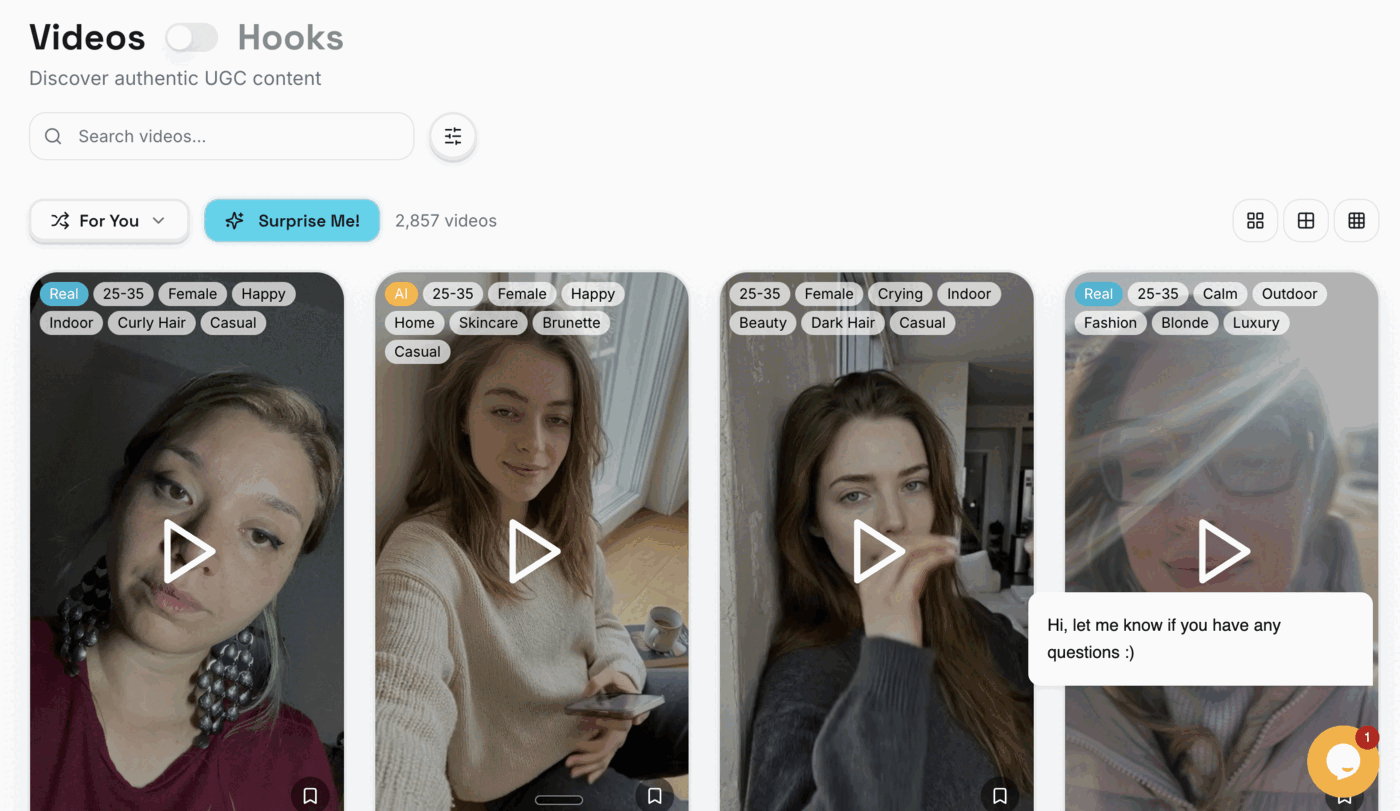
- The most efficient workflow: test hooks with a clip library (UGCDrop, $0.96/clip), scale winners into Meta Partnership Ads via creator platforms like Insense.
Meta advertising has become the primary growth channel for DTC e-commerce brands — and UGC has become the primary creative format that actually works within it. Consumers have grown deeply skeptical of polished brand advertising but remain highly responsive to peer recommendations and authentic creator content. This guide covers the full Meta UGC playbook: why it works, which formats convert, how to source it at scale, and how to measure performance to continuously improve.
Why does UGC outperform traditional creative on Meta (Facebook and Instagram)?
Meta's advertising ecosystem spans billions of impressions daily. In that environment, the content that earns attention is the content that doesn't announce itself as advertising. UGC achieves this by mimicking the style, tone, and format of the organic content users are already choosing to consume — peer recommendations, candid reviews, lifestyle moments.
Three compounding factors drive UGC's performance advantage on Meta:
- Trust transfer: When a real person talks about a product, viewers assign credibility they wouldn't give a brand ad. Peer recommendations carry a social proof signal that no amount of production budget can manufacture.
- Feed blending: UGC styled to match organic Facebook and Instagram content reduces ad recognition — fewer users scroll past before the hook lands.
- Engagement signals: UGC generates stronger likes, comments, and shares than brand creative. Meta's algorithm rewards these signals with lower CPM, creating a compounding cost advantage over time.
What are the best Meta ad formats for UGC in 2026?
Feed Video Ads: The Foundation
Feed video ads remain the highest-volume placement for UGC on Meta. They appear natively in the Facebook and Instagram feeds alongside organic content. UGC in this format should be 15–60 seconds, hook within the first 3 seconds, and include captions (85% of Facebook videos are watched without sound). The most effective Feed UGC feels like a friend's organic post — candid framing, natural lighting, direct-to-camera delivery.
Instagram and Facebook Reels: The Growth Placement
Reels is the fastest-growing ad placement on Meta, with strong algorithmic amplification for high-engagement content. UGC fits Reels natively — the format was designed for authentic, short-form vertical video. Reels UGC should be 15–30 seconds, hook in the first 2 seconds, and feel native to the format. The key mistake brands make on Reels is over-producing content that signals "ad" immediately — authenticity of execution matters more in Reels than in any other placement.
Meta Partnership Ads: The Trust Multiplier
Meta Partnership Ads (formerly Branded Content Ads) let brands run paid ads from creator accounts rather than brand pages. The ad appears to come from the creator — "Creator X and Brand Y" — with the creator's followers and engagement history attached. Partnership Ads typically outperform brand-handle ads in CTR and conversion because the social proof of a real creator's account amplifies the trust signal of the UGC content itself. For brands running Insense, Partnership Ads are integrated directly into the platform workflow.
Carousel Ads: Multiple UGC in One Unit
Carousel ads let you stack multiple UGC testimonials, before-and-after images, or product views into a single swipeable unit. For UGC, carousels work well for showcasing customer reviews across multiple use cases, or showing the same product across different demographics (ages, settings, skin tones) to demonstrate broad applicability. Each card can link to a different product page — useful for catalogues with multiple SKUs.
What UGC content converts best on Meta ads?
| UGC Format | Best Placement | Ideal Length | Primary Conversion Mechanism |
|---|---|---|---|
| Product review / testimonial | Feed, Stories | 30–60 sec | Trust and social proof |
| Before-and-after | Feed, Reels | 15–45 sec | Visual proof, aspiration |
| Unboxing and first impression | Feed, Stories | 30–60 sec | Discovery, curiosity |
| How-to demonstration | Feed, Reels | 30–45 sec | Education, intent |
| Problem-solution narrative | Feed | 45–60 sec | Pain point resonance |
| Customer carousel testimonials | Feed carousel | 3–5 cards | Social proof at scale |
How do you source UGC for Meta ads efficiently?
The sourcing method you choose determines your creative testing velocity. Performance teams on Meta typically need 5–20 new creative variations per week to maintain fresh content and avoid audience fatigue.
- Instant clip libraries (UGCDrop): Download real human clips immediately at $0.96 each. Best for hook testing, reaction clips, and B-roll. No waiting, no coordination, no minimum batch. 100,000+ clips searchable by emotion, age, gender, and setting.
- Creator platforms (Insense, Billo): Commission custom product-specific content from vetted creators. 7–14 day turnaround, $50–200/video. Best for scaling proven concepts with on-product creative. Insense integrates directly with Meta Partnership Ads.
- Nano influencers (1K–10K followers): 67% of all creators globally fall in this tier. Engagement rates of 5–8% — highest authenticity signal. $100–500/video. Best for genuine, audience-specific testimonials.
- Organic customer UGC: Always get explicit written permission before using customer content. Monitor brand mentions, respond to customers who post organically, and build a permission-first content pipeline from your best evangelists.
How do you measure and optimize Meta UGC ad performance?
Four key metrics determine whether your UGC creative is working on Meta:
- Thumb-stop rate (2-second video views ÷ impressions): Measures hook effectiveness. A strong UGC hook achieves 25%+ thumb-stop rate. Below 15% means the hook needs replacing regardless of everything else.
- CTR (click-through rate): Measures interest conversion. Benchmark 1–3% for well-performing UGC ads. Consistently below 0.5% signals either the hook isn't creating purchase intent or the audience targeting is misaligned.
- CPA (cost per acquisition): The ultimate measure. Compare UGC CPA against your baseline creative CPA — most brands see 20–40% lower CPA on UGC versus traditional creative.
- ROAS (return on ad spend): Target 3–5x ROAS for profitable UGC campaigns in e-commerce. Below 2x requires either creative iteration or audience refinement.
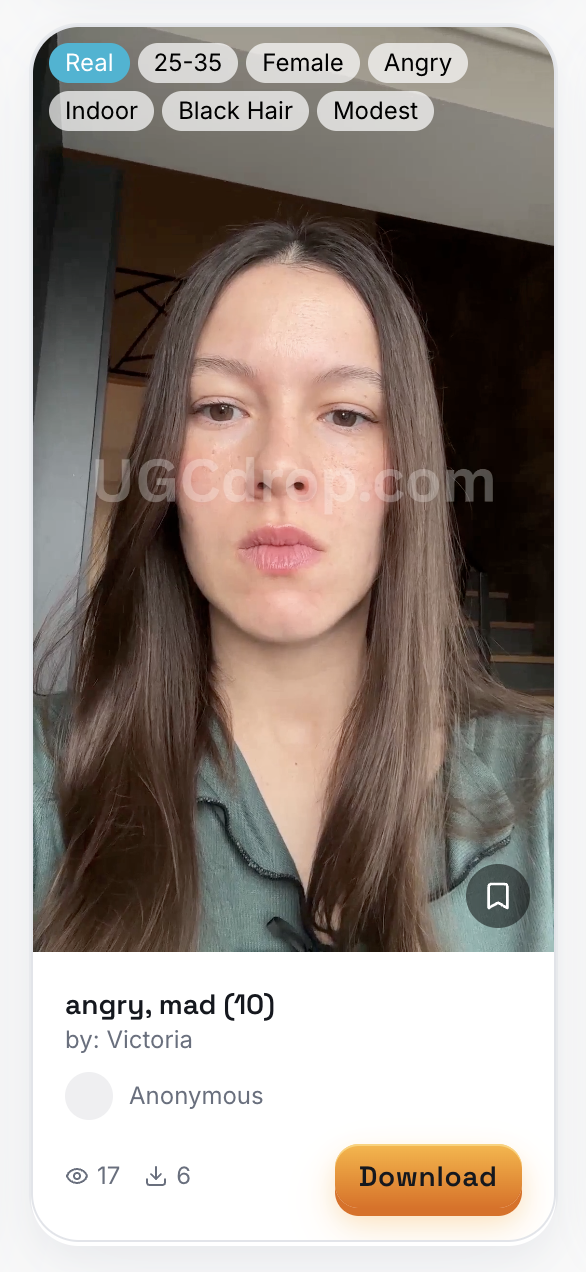
Source Meta UGC clips instantly. Real humans, from $0.96 each.
UGCDrop's 100,000+ searchable clip library gives you the creative fuel for Meta UGC testing — without waiting 14 days for creator deliveries.
Start Sourcing Free